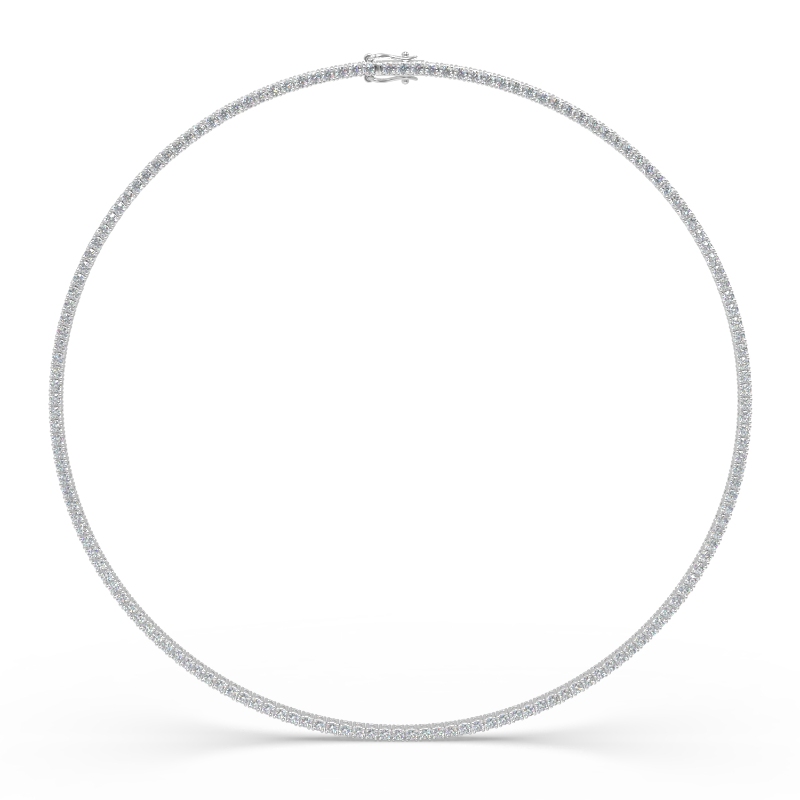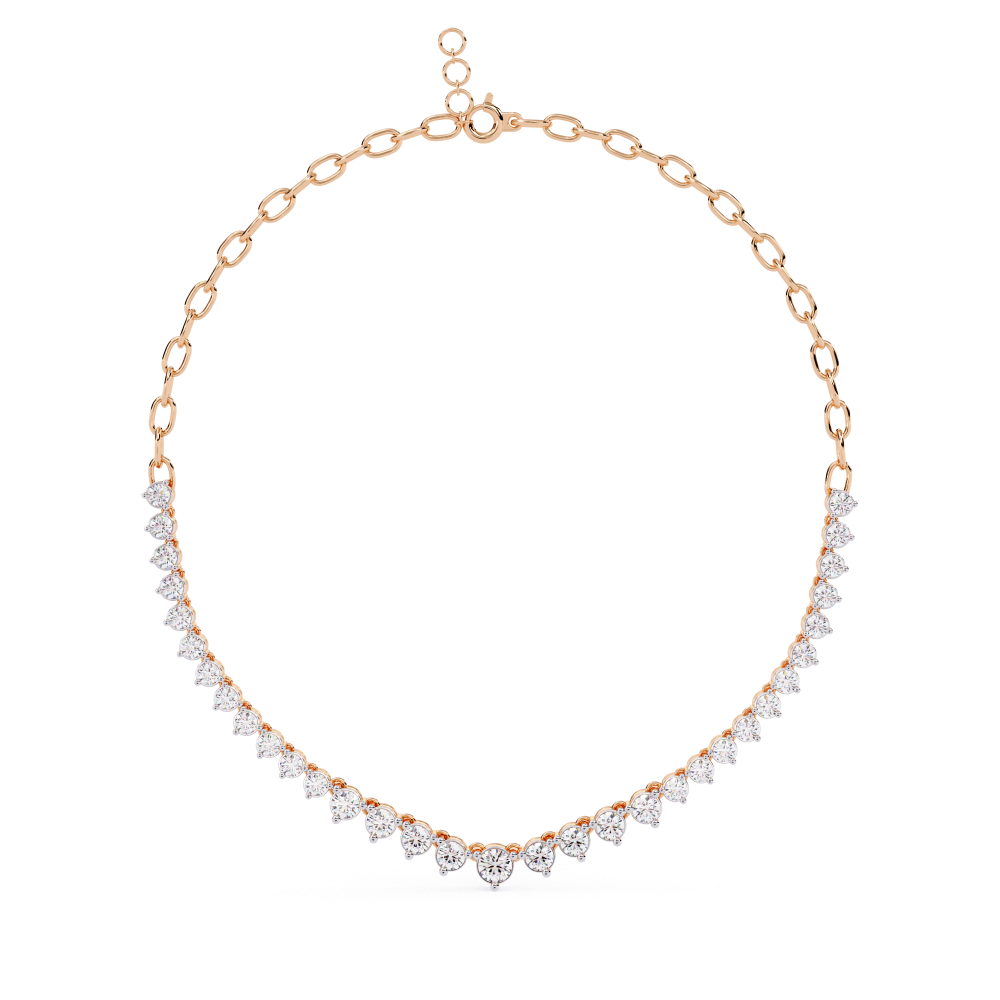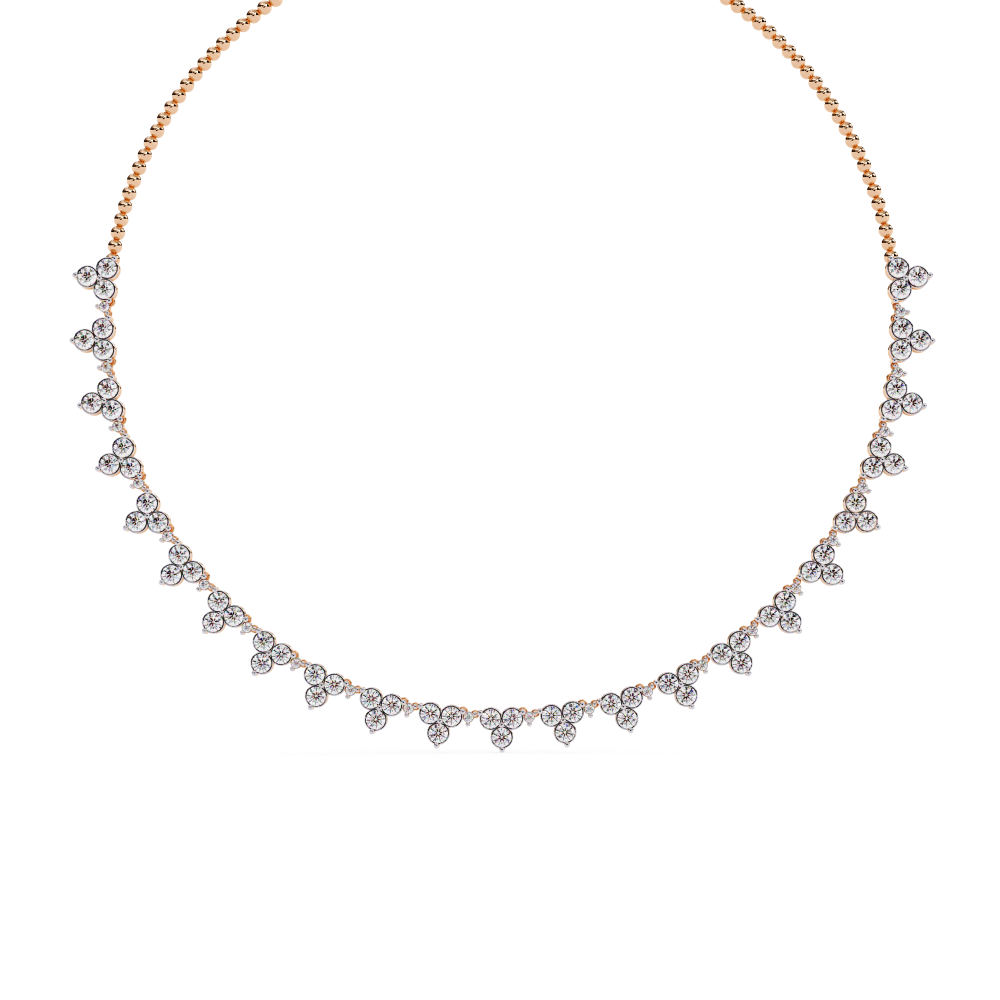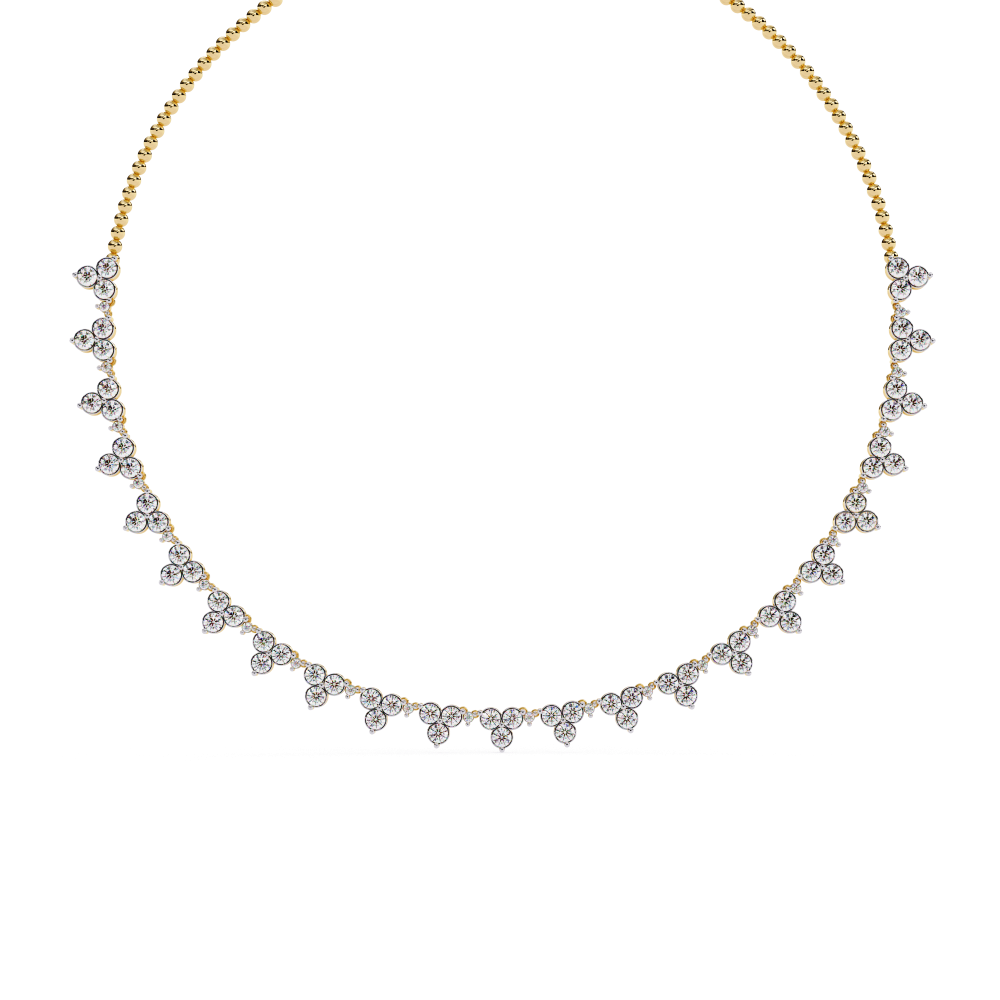
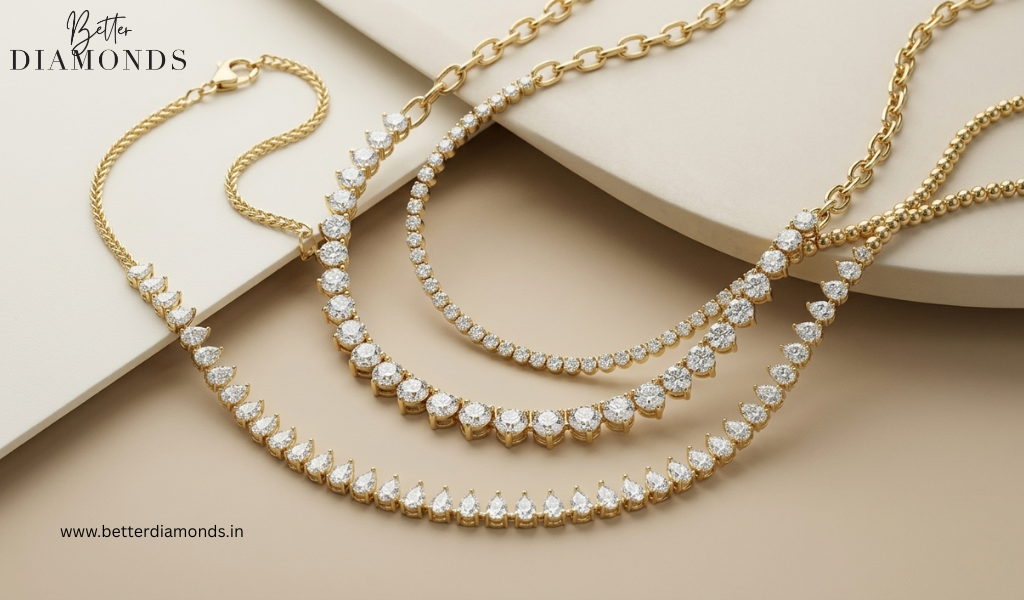
If you have been scrolling through jewellery stores lately, chances are you have come across the lab grown diamond tennis necklace trend taking over Indian weddings, anniversaries and everyday wardrobes alike. A lab grown diamond tennis necklace typically costs between ₹45,000 to ₹3,50,000 in India, depending on carat weight, clarity and metal choice. That is nearly 40-50% less than what you would pay for the same look in natural diamonds. So what exactly makes this necklace so popular right now, and is it actually worth your money? Let's break it all down.
What Is a Lab Grown Diamond Tennis Necklace?
In simple terms, a lab grown diamond tennis necklace is a necklace featuring a continuous line of individually set diamonds, where each stone is grown inside a lab rather than dug out of the earth. The process uses advanced technology, either Chemical Vapour Deposition (CVD) or High Pressure High Temperature (HPHT), to recreate the exact natural conditions under which diamonds form.
Here's the part that surprises most people: a lab created diamond tennis necklace is chemically, physically and optically identical to a mined one. Same carbon structure, same hardness (10 on the Mohs scale, the hardest natural material known), same fire and brilliance. The only real difference is where the stone came from, not how it looks or performs.
You will often see this necklace listed under different names while shopping online, like lab made diamond tennis necklace or man made diamond tennis necklace. Don't let the terminology confuse you, they all mean the exact same product.
Why Are So Many People Choosing This Over Natural Diamonds?
Honestly, the appeal comes down to a few simple reasons.
You get more diamond for your money. A man made diamond tennis necklace lets you buy a bigger, bolder piece within a budget that would only get you a modest one in natural diamonds. That 5-carat necklace you have been eyeing at ₹8-10 lakhs in natural stones? It could cost you ₹3-4 lakhs in lab grown, sometimes less.
The certification game hasn't changed. Good jewellers still get every lab created diamond tennis necklace certified through IGI, using the same 4Cs grading, Cut, Colour, Clarity and Carat, that natural diamonds go through. So you are not compromising on trust or transparency.
It's a more conscious choice. No mining involved means no environmental disruption and no conflict-diamond concerns. For a lot of younger Indian buyers today, that matters just as much as the sparkle.
You can actually wear it daily. Because the per-carat cost is so much lower, many women are no longer locking their tennis necklace away for special occasions. It has become an everyday piece, paired with kurtas, sarees, even casual western wear.
How Much Does a Lab Grown Diamond Tennis Necklace Actually Cost?
Pricing depends heavily on carat weight, so here's a rough breakdown to help you budget:
| Carat Weight | Approximate Price Range (INR) |
|---|---|
| 1-2 carat | ₹45,000 - ₹90,000 |
| 3-4 carat | ₹1,20,000 - ₹1,80,000 |
| 5-7 carat | ₹2,00,000 - ₹2,80,000 |
| 8+ carat | ₹3,00,000 - ₹3,50,000+ |
Keep in mind, the metal you choose (18K gold versus platinum) and the setting style (prong versus bezel) will also move the price up or down. Whatever you settle on, always ask for an IGI certificate. It is your proof that you are paying for exactly what the jeweller claims you are getting.
Lab Grown vs Natural: How Do They Really Compare?
This is probably the question on your mind right now, so here is the honest comparison.
| Factor | Lab Grown | Natural |
|---|---|---|
| Price | 40-50% lower | Higher |
| Appearance | Identical brilliance | Identical brilliance |
| Hardness | 10 Mohs | 10 Mohs |
| Certification | IGI, GIA available | IGI, GIA available |
| Origin | Created in lab | Mined from earth |
| Resale value | Lower | Higher |
To the naked eye, and even under a standard jeweller's loupe, both look exactly the same. The real difference shows up in your wallet and in your personal values, whether you prioritise budget and sustainability, or you are looking at this as a long-term investment piece.
What Should You Check Before Buying One?
Before you swipe your card, run through this quick checklist:
- IGI Certification — This confirms the diamond's authenticity along with its exact carat weight, clarity and colour grade.
- Metal Purity — Look for the BIS hallmark if you are going with gold, or check purity marks if it's platinum.
- Setting Type — Prong settings let the diamonds catch more light for extra sparkle, while bezel settings offer better protection for daily wear.
- Buyback or Exchange Policy — Find out if the jeweller offers a certified buyback option, useful if you ever want to upgrade later.
- Clasp Quality — Since this necklace sits close to your neck and gets handled often, a secure box clasp with a safety latch is non-negotiable.
When Should You Gift or Wear One?
A lab grown diamond tennis necklace fits beautifully into almost any celebration, weddings, anniversaries, milestone birthdays, or festive occasions like Diwali and Karva Chauth. Its clean, timeless design means it works just as well with a heavily embroidered lehenga as it does with a simple western dress. That versatility is exactly why it has become such a popular gifting choice among Indian families over the last couple of years.
Simple Tips to Keep It Sparkling
Taking care of your necklace doesn't require much effort. A soft brush with mild soap solution once in a while keeps the diamonds looking freshly polished. Store it in a soft pouch separately from your other jewellery to avoid scratches, and get the clasp inspected by your jeweller every few months, just to be safe.
FAQ's
Does the setting style affect how long a tennis necklace lasts?
Yes, considerably. Bezel settings wrap the metal fully around each diamond, offering better protection against daily bumps, while prong settings expose more of the stone for extra brilliance but need more careful handling and periodic prong-tightening checks.
Does a lab made diamond tennis necklace lose its value over time?
Labcreated diamonds generally hold a lower resale value compared to natural diamonds, mainly because their supply isn't limited the way mined diamonds are. That said, they keep their beauty and quality forever, making them ideal if you are buying for personal wear rather than as an investment.
How can I verify if my tennis necklace actually has certified lab grown diamonds?
Simply ask your jeweller for an IGI or GIA certificate. It will clearly state the diamond's growth method, along with the carat weight, clarity and colour grade for every stone used in the necklace.
What carat size should I go for if this is my first tennis necklace?
A 2-3 carat lab grown diamond tennis necklace is a great starting point. It gives you noticeable sparkle at a reasonable price, and works well whether you are wearing it daily or saving it for special occasions.