If you're about to invest in a lab created diamond tennis bracelet, getting the size right matters more than almost any other decision you'll make, more than carat weight, more than metal color. A bracelet that's too loose slides around, catches on things, and eventually gets lost. One that's too tight cuts into your wrist and looks awkward instead of elegant. The good news is that you don't need a jeweller in the room to get an accurate measurement. All you need is a soft measuring tape (or a strip of paper and a ruler), five minutes, and this guide.
Whether you're buying your first lab grown diamond tennis bracelet or picking one out as a gift, here's exactly how to measure your wrist at home and choose a size you'll actually love wearing every day.
Why Tennis Bracelet Sizing Is Different From Rings
Rings only need to account for the width of one finger. A tennis bracelet, on the other hand, sits along the entire circumference of your wrist and has to move naturally with it, bending as you type, cook, drive, or shake someone's hand. Because a lab made diamond tennis bracelet is usually set with a continuous row of stones, an incorrect size is far more noticeable than it would be with a plain gold chain. Too tight, and the diamonds dig into your skin. Too loose, and the whole line of stones swings around to the underside of your wrist, which not only looks off but increases the risk of the clasp catching on clothing or snagging on furniture.
This is exactly why we always recommend measuring before you buy, not estimating.
How to Measure Your Wrist at Home (Step-by-Step)
What you'll need: A flexible fabric or vinyl measuring tape (the kind tailors use), or a thin strip of paper and a ruler.
- Wrap the tape around your wrist bone. Position it just below the wrist bone, where you'd naturally wear a bracelet or watch — not higher up the arm.
- Keep it snug, not tight. The tape should touch your skin all the way around without pressing into it. You should be able to slide one finger underneath comfortably.
- Note the measurement in millimetres or inches. Most Indian and international jewellers list bracelet sizes in both, so take note of whichever your tape offers.
- Add your comfort allowance. This is the step most people skip, and it's the one that actually determines fit. Add 1.5 to 2 cm (roughly 0.5 to 0.75 inches) to your bare wrist measurement to get your final bracelet size. This extra length gives the bracelet room to drape naturally instead of sitting flat like a cuff.
- Double-check with a paper strip. If you don't have a measuring tape handy, wrap a strip of paper around your wrist, mark where it overlaps, then measure that length against a ruler. It's a low-tech method, but it's just as accurate.
If your measurement falls between two standard sizes, it's usually safer to round up slightly rather than down, a tennis bracelet that's marginally loose is far more comfortable than one that's tight against the wrist bone.
Standard Tennis Bracelet Size Chart
| Wrist Circumference | Recommended Bracelet Length | Fit |
|---|---|---|
| 14–15 cm (5.5"–6") | 16 cm (6.5") | Snug |
| 15–16 cm (6"–6.3") | 17 cm (6.75") | Standard |
| 16–17 cm (6.3"–6.7") | 18 cm (7") | Relaxed |
| 17–18 cm (6.7"–7.1") | 19 cm (7.5") | Loose |
Most adult women fall into the 16–17 cm bracelet range, while most men fall into the 18–19 cm range, but always go by your own measurement rather than an average, since wrist sizes vary widely.
Tips for a Comfortable, Secure Fit
- Measure at the end of the day. Wrists can swell slightly with heat or activity, so an evening measurement gives you a more realistic everyday fit.
- Account for the clasp type. A lab grown diamond bracelet with a box clasp and safety catch sits slightly differently than one with a lobster clasp — if you're between sizes, a secure clasp can make a slightly looser fit feel safer.
- Think about how you'll wear it. If you plan to layer it with a watch or stack it with other bracelets, sizing very slightly looser gives you more room to move.
- Consider your dominant hand. Many people find a bracelet on their non-dominant wrist feels more comfortable day-to-day since it experiences less repetitive movement.
- When gifting, borrow a reference. If you're buying a lab created diamond bracelet as a surprise gift, borrow one of their existing bracelets and measure its inner circumference instead of guessing.
Why Getting the Size Right Matters More With Lab Grown Diamonds
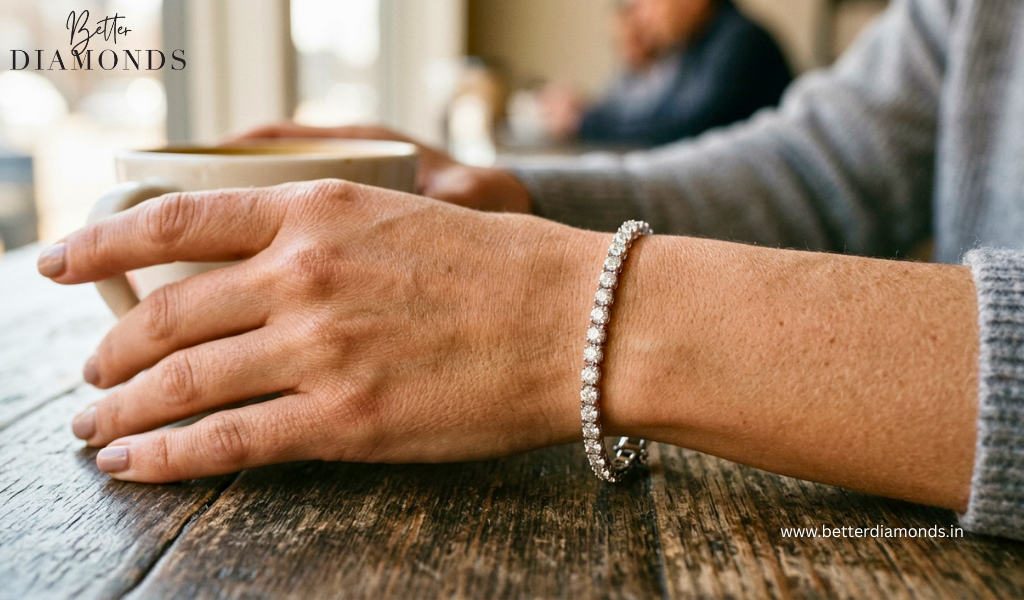
Because a man made diamond tennis bracelet typically features 15 to 40+ diamonds set edge-to-edge, any misalignment in fit becomes visually obvious, the line of stones won't sit flush against your wrist. Unlike a plain bangle, you can't simply "adjust as you go." Getting your measurement right the first time means your bracelet catches the light evenly, moves naturally with your wrist, and doesn't need a trip back to the jeweller for resizing within the first few months of wear.
At Better Diamonds, every lab created diamond tennis bracelet is made to order, which means we can craft your piece to your exact wrist measurement instead of forcing you into a generic standard size, something most off-the-shelf tennis bracelets simply don't offer.
Final Thoughts
Measuring your wrist at home takes less time than scrolling through a jewellery website, but it's the single most important step in making sure your lab grown diamond tennis bracelet fits the way it's meant to, comfortably, securely, and beautifully. Once you have your measurement and comfort allowance noted down, you're ready to choose a design with confidence, whether that's a classic four-prong setting or a bezel style built for daily wear.
FAQ's on Lab Diamond Tennis Bracelet
1. How do I measure my wrist size for a tennis bracelet without a measuring tape?
Wrap a thin strip of paper or ribbon around your wrist just below the wrist bone, mark where it overlaps, then lay it flat against a ruler to get your measurement in cm or inches.
2. What is the standard size for a diamond tennis bracelet?
Most tennis bracelets range from 16 cm to 19 cm (6.5" to 7.5"), with 17–18 cm being the most common size for adult women and 18–19 cm for men.
3. Should a tennis bracelet be tight or loose?
A tennis bracelet should sit snugly but not tight, you should be able to fit one finger comfortably underneath it. Add 1.5–2 cm to your bare wrist measurement for the ideal drape.
4. Can a lab created diamond tennis bracelet be resized after purchase?
Yes, most tennis bracelets can be resized by adding or removing a few links or diamonds, though it's always better to get an accurate measurement upfront to avoid extra cost or wait time.
5. Does wrist size change over time, affecting bracelet fit?
Yes, minor fluctuations from weight change, water retention, or age are normal. If your weight has changed significantly since your last measurement, it's worth re-measuring before buying or resizing a bracelet.